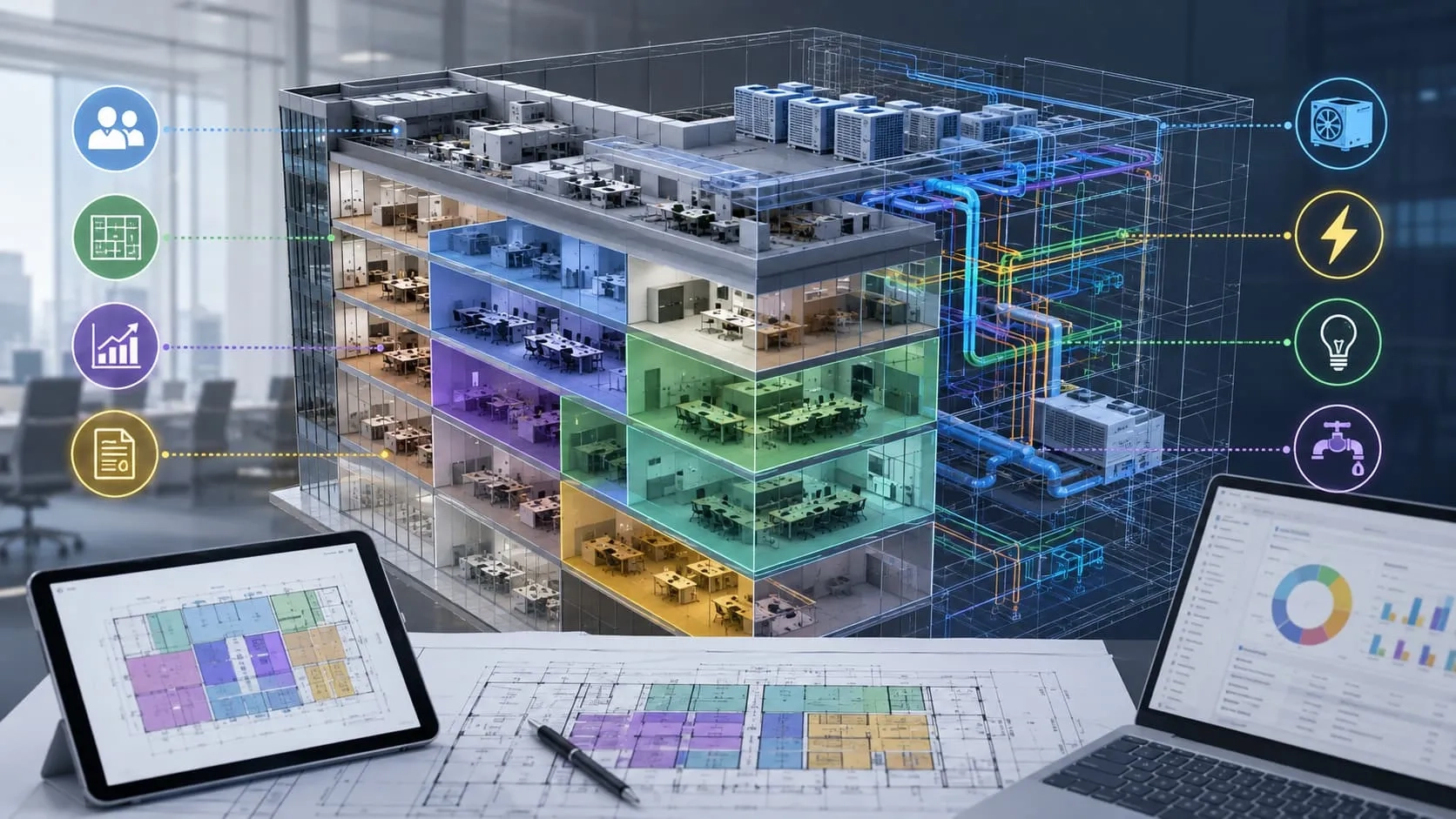
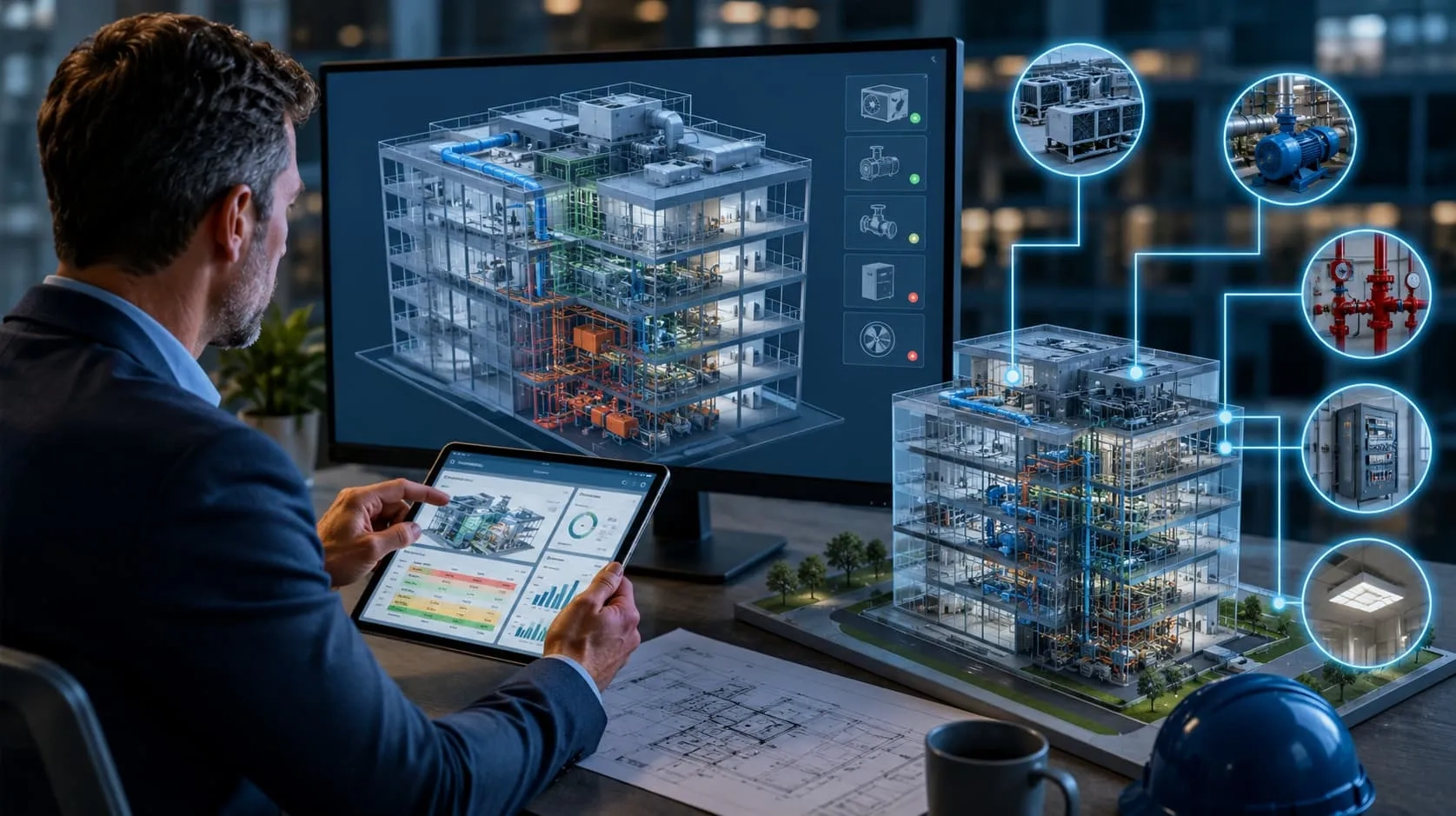
Is the lowest upfront cost really the lowest-cost option for a building? A cheaper system or material may reduce the initial investment, but higher energy consumption, more frequent maintenance, or earlier replacement can make it far more expensive over time. Conversely, a higher upfront investment may deliver significant savings throughout the building’s operational life. The real challenge, therefore, is not simply reducing construction costs, but understanding how today’s decisions shape tomorrow’s costs. This is where lifecycle cost thinking—and BIM as a source of structured building and asset data—can support better long-term cost decisions.
CAPEX and OPEX: Why Building Costs Should Be Viewed Together
For a building, the cost of an investment does not end when construction is complete. To understand the true financial impact of a building decision, capital expenditure and operating expenditure need to be considered together across the building lifecycle.
What Is Capital Expenditure?
Capital Expenditure (CAPEX) refers to major investments made to create, improve, or replace building assets. This can include construction, major renovations, equipment purchases, system upgrades, and significant asset replacements. These decisions typically involve substantial upfront spending and can determine how a building performs and costs to operate for many years.
What Is Operating Expenditure?
Operating Expenditure (OPEX) covers the ongoing costs required to keep a building functioning. These include energy, maintenance, repairs, utilities, and facility operations. Unlike CAPEX, OPEX accumulates throughout the building's operational life and can become a significant part of the total cost of owning and operating a property.
Why Optimizing One Can Increase the Other
CAPEX and OPEX are often closely connected. Choosing a lower-cost equipment option may reduce the initial investment, but if that equipment consumes more energy, requires more frequent maintenance, or needs to be replaced sooner, the resulting OPEX can be significantly higher.
Conversely, a higher initial investment in more efficient equipment or durable materials may reduce energy consumption, maintenance requirements, and replacement costs over time. The goal, therefore, is not to minimize CAPEX or OPEX individually, but to understand their combined impact across the building lifecycle.
This is the underlying logic of whole-life cost and Total Expenditure (TotEx) thinking: a building decision should be evaluated not only by what it costs to acquire or construct, but also by what it will cost to operate, maintain, and replace throughout its life.
Why Building Owners Need Lifecycle Cost Visibility
For building owners, the cost of a property extends far beyond the initial construction budget. Decisions made during design—such as the choice of materials, HVAC systems, façades, lighting, and electrical equipment—can influence energy consumption, maintenance requirements, replacement cycles, and operating costs for decades. Understanding these long-term cost implications is essential for making better investment decisions.
Initial Cost Is Only Part of the Story
A building may operate for 30, 50, or even 60 years, while many of the decisions that shape its financial performance are made before construction begins. The upfront cost of a material or system is relatively easy to compare, but its long-term impact may be less obvious.
A lower-cost HVAC system, for example, may require more energy and maintenance over its lifetime. A more expensive system may require greater initial investment but deliver lower operating costs and a longer service life.
For building owners, the important question is therefore not only:
“How much will this cost to build?”
but also:
“What will this decision cost us to operate and maintain over the building’s lifetime?”
Early Decisions Can Lock In Future Costs
Once major design and specification decisions are finalized, changing them later can become expensive, disruptive, and technically challenging. Replacing an inefficient system after construction, for example, may require significant capital investment while also disrupting normal building operations.
This makes the timing of cost decisions just as important as the decisions themselves. The earlier different design, equipment, and material options can be evaluated, the more opportunities there are to balance initial investment against future operating and maintenance costs.
In other words, cost optimization should not begin when the building is already in operation. It should begin when there is still flexibility to influence what the building will cost to own and operate.
Operational Costs Can Accumulate for Decades
Even when construction costs are carefully controlled, operating a building generates expenses year after year. Energy, maintenance, repairs, equipment replacement, and facility operations can accumulate into a substantial share of the property's total cost over its lifecycle.
This is why lifecycle cost visibility matters. Rather than evaluating a building decision based solely on its initial price, owners can consider its potential impact on CAPEX, OPEX, asset performance, and future replacement requirements.
For building owners, the objective is not simply to find the cheapest option at the time of investment. It is to understand the total financial consequences of that decision over the building's useful life—and make investment choices accordingly.
How BIM Supports Better Capital Expenditure Decisions
Capital expenditure decisions are made long before a building starts operating, but their financial consequences can last for decades. During design and procurement, project teams must decide which materials, systems, and equipment to invest in—often while balancing upfront cost against performance, durability, and future operating requirements. BIM can help bring this information together, giving decision-makers a clearer basis for evaluating investment choices while changes are still relatively easy to make.

BIM Makes Building Quantities More Accessible
Accurate quantities are fundamental to reliable cost planning. Yet in conventional workflows, teams may need to extract quantities from multiple drawings, schedules, specifications, and other project documents. As the design evolves, keeping these figures consistent can require significant manual effort.
BIM provides a structured representation of areas, quantities, components, materials, and equipment, making relevant information easier to access for quantity takeoff and cost estimation. When design changes occur, associated quantities can also be reviewed and updated within the model, helping teams understand how those changes may affect the investment required.
The value is not simply faster quantity extraction. More accessible and consistent quantity information can give project teams greater visibility into where capital is being allocated and how design development may change the overall investment.
BIM Helps Compare Design and Specification Options
The lowest upfront price is not always the most economical choice over the building lifecycle. Projects often involve alternatives with different levels of initial investment, energy efficiency, durability, maintenance requirements, and service life.
BIM can help organize the building and component information needed to evaluate these alternatives in their actual project context. Consider two HVAC systems: one may have a lower purchase cost, while the other requires a larger initial investment but offers better energy efficiency and a longer expected service life.
When BIM information is combined with cost and performance data, decision-makers can move beyond simply asking “Which option costs less?” and instead consider “Which option provides better value over its expected life?”
This is particularly important for building owners, because a decision that appears cost-effective at the procurement stage may create significantly higher operating expenditure later.
BIM Helps Identify the Cost Impact of Design Changes Earlier
Design changes are inevitable, but their financial impact can become much greater as a project moves toward construction. A change to one component may affect quantities, connected systems, specifications, procurement, or other areas of the project.
BIM can provide a coordinated digital representation of the building, helping teams understand these relationships and assess the potential impact of changes earlier. Changes to quantities, components, design scope, and system configurations can be reviewed before they become embedded in construction.
Earlier visibility gives project teams more time to compare alternatives, revise specifications, or reconsider a design decision before changes become expensive to implement.
Ultimately, BIM's role in CAPEX management is not simply to calculate project costs. Its greater value is helping decision-makers understand how design and investment choices affect the amount of capital required—and whether those choices are likely to deliver sufficient value throughout the building's lifecycle.
How BIM Can Help Reduce Operating Expenditure
Once a building is in operation, costs continue to accumulate through energy consumption, maintenance, repairs, and day-to-day facility management. BIM does not eliminate these expenses by itself. Its value lies in providing structured building and asset information that can be connected with operational data, helping teams make more informed decisions about how a building is operated and maintained.

Better Asset Information Supports More Efficient Maintenance
Effective maintenance starts with knowing what assets exist, where they are located, what condition they are in, and what information is relevant to maintaining them. BIM can store or connect information such as equipment specifications, installation details, locations, expected service life, and maintenance requirements.
This gives facility teams a more reliable source of asset information instead of relying on disconnected drawings, manuals, spreadsheets, and records. When an issue occurs, teams can more quickly identify the relevant equipment and access the information needed to plan inspection, repair, replacement, or preventive maintenance.
Better asset information does not automatically reduce maintenance costs. However, it can help reduce information-related inefficiencies, improve maintenance planning, and support better decisions about when and how assets should be maintained or replaced.
BIM Can Support Better Energy Decisions
Energy can represent a significant portion of a building's ongoing operating costs. BIM can provide useful spatial and equipment context when combined with energy consumption data, equipment performance data, sensor data, and building operational data.
For example, BIM can show which HVAC equipment serves a particular floor or zone, while operational data can reveal how that equipment is actually performing. Bringing these sources together can help teams investigate energy inefficiencies, compare system performance, and identify opportunities to improve energy use.
The important distinction is that BIM does not reduce energy consumption on its own. Rather, it provides the building context that allows energy and operational data to be interpreted more effectively and used to support better decisions.
Better Information Can Reduce Operational Inefficiency
Operating costs are not limited to energy and maintenance. Teams also spend time searching for information, checking different versions of documents, updating records, and coordinating work across departments.
A well-structured BIM environment can help reduce some of this information-related overhead by making building and asset data easier to find and share. Maintenance teams can locate equipment information more efficiently, FM teams can work from more consistent asset records, and property teams can reduce unnecessary duplication between different information sources.
Over time, these improvements in information access, coordination, and decision-making can contribute to more efficient building operations. The potential OPEX benefit of BIM therefore comes not from the model itself, but from how well its information is connected to the systems, data, and workflows used to operate the building.
BIM Connects CAPEX Decisions With Future OPEX
A building decision made today can create operating costs for decades. This is why capital expenditure should not be evaluated in isolation from the costs a building will incur once it is in use. BIM can help provide the asset and building context needed to connect an initial investment decision with its potential long-term operational implications.
Higher Initial Investment Can Lead to Lower Operating Costs
Consider an HVAC system with a higher upfront cost but better energy efficiency. The initial investment may be greater, but lower energy consumption over years of operation can offset that difference and reduce ongoing operating expenditure.
Higher CAPEX
→ Better efficiency
→ Lower energy consumption
→ Lower OPEX over time
The same principle applies to other building systems where performance during operation can have a significant financial impact.
Higher-Quality Materials Can Reduce Future Replacement Costs
A cheaper material may reduce initial construction costs, but a shorter service life can lead to more frequent repairs or replacement. A higher-quality material may require greater investment at the beginning while lasting longer and requiring less intervention.
Higher CAPEX
→ Longer service life
→ Fewer replacements
→ Lower lifecycle cost
For building owners, the relevant question is therefore not simply which material costs less today, but which option provides better value over the building's expected life.
Better Equipment Can Reduce Maintenance-Related OPEX
Equipment selection can create a similar trade-off. An asset with a lower purchase price may require more frequent maintenance, consume more resources, or need earlier replacement. Investing in equipment with better reliability or performance can increase CAPEX while potentially reducing maintenance and operating costs over time.
Higher equipment CAPEX
→ Better reliability
→ Fewer maintenance interventions
→ Lower OPEX
BIM Provides the Context for Connecting These Decisions
BIM does not determine which option is financially better on its own. Its value is in connecting building components, specifications, quantities, locations, asset information, and lifecycle data within a structured environment.
When this information is combined with cost, energy, maintenance, and service-life data, decision-makers can evaluate an investment based on more than its initial price. They can consider how a decision made during design or procurement may influence the building's operating costs years later.
This shifts the focus from “What does this asset cost?” to a more useful question:
“What will this asset cost us over its lifecycle?”
That shift—from optimizing individual costs to understanding their relationship across the lifecycle—is where BIM can support more informed CAPEX and OPEX decisions.
Read more: How BIM Turns Building Data Into Better Tenant and Space Management
From BIM Data to Better Cost Decisions
The difficult part of lifecycle cost optimization is not simply calculating how much a building costs. It is having the right information early enough to compare options—and keeping that information useful throughout the building's life. Poorly structured or incomplete building data can make it difficult to connect design choices with quantities, assets, maintenance requirements, and future operating costs.
This is where Harmony AT can support the process. Our BIM expertise focuses on creating and organizing the building information needed for different stages of the lifecycle—from design and quantity-related data to existing-building asset information. By establishing a more reliable BIM data foundation, organizations can connect building information with cost, maintenance, and operational workflows to support more informed investment decisions.
Build a BIM data foundation for better lifecycle cost decisions.
Categories