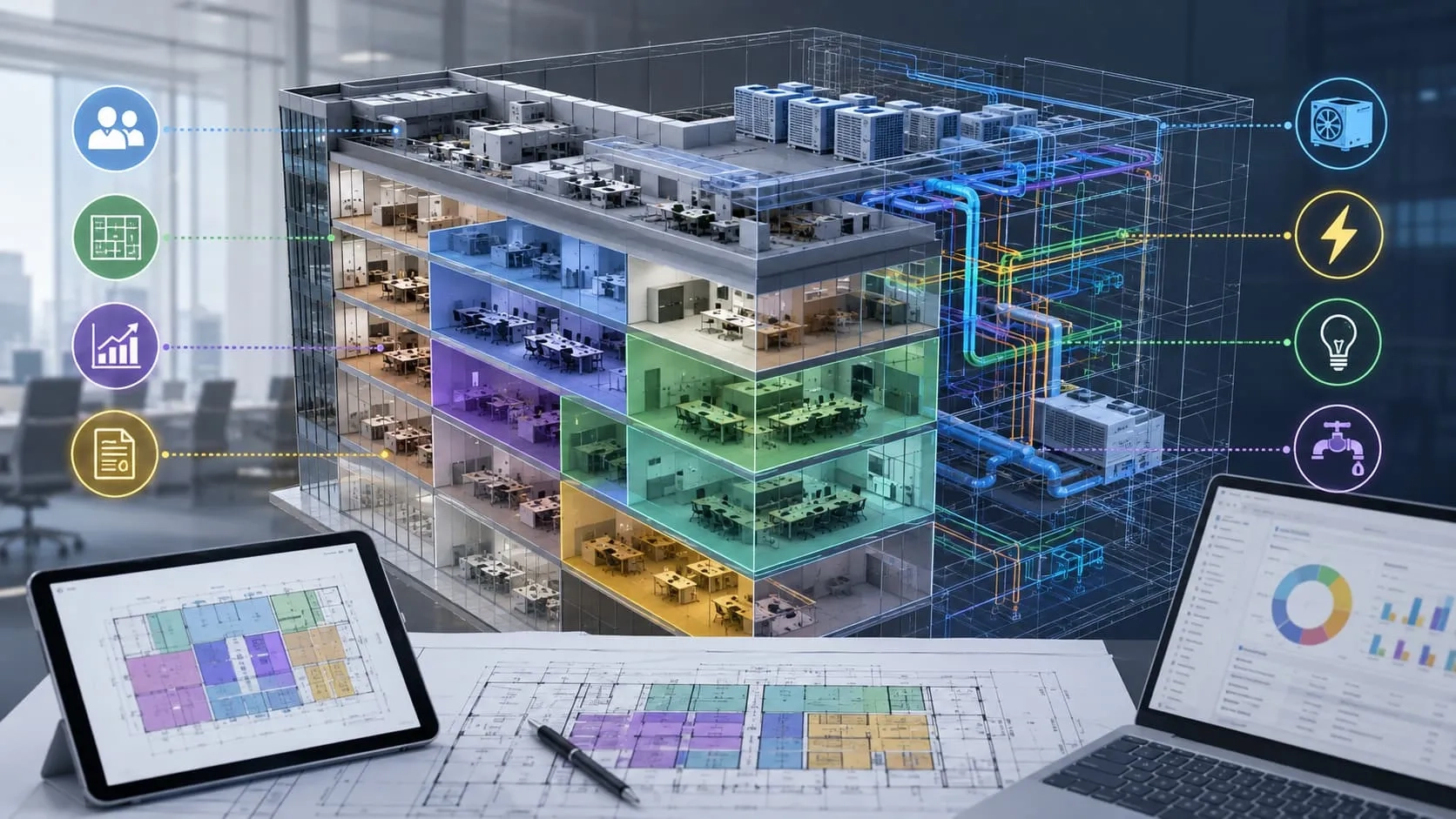
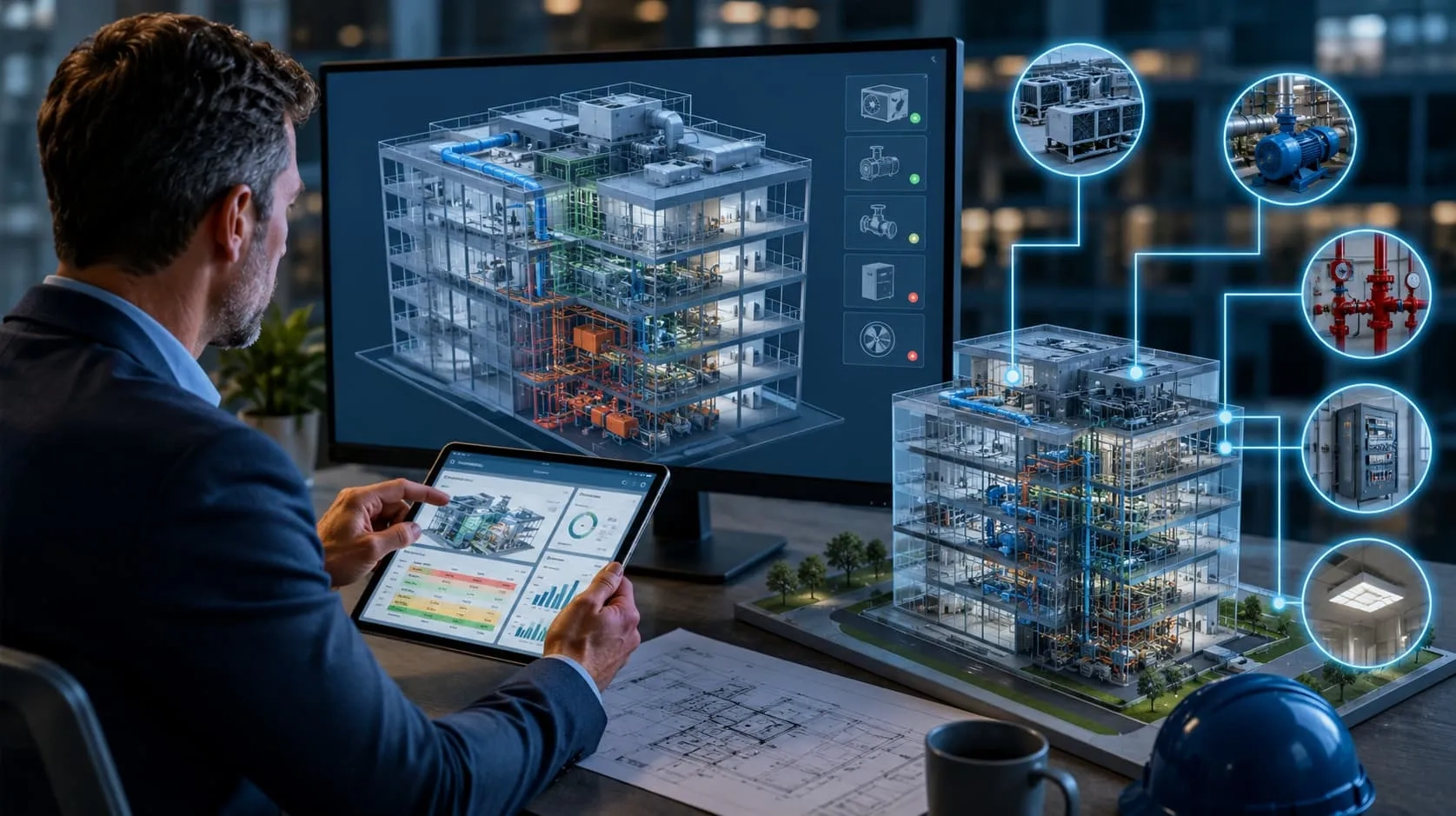
Many construction projects still rely on 2D CAD drawings — a familiar and widely used approach, but one that often leads to coordination issues, design errors, and costly rework as project complexity increases. At the same time, Building Information Modeling (BIM) is rapidly becoming a standard requirement in many countries and large-scale projects, especially for public and international developments. This growing shift is creating a gap between traditional workflows and modern expectations. In this article, we explore why moving from 2D CAD to 3D BIM is not just about improving accuracy and efficiency, but also about staying aligned with evolving industry requirements — and how you can make that transition effectively.
The Limitations of 2D CAD in Modern Projects
Lack of Early Clash Detection
One of the key limitations of 2D CAD is the difficulty in identifying clashes between disciplines at an early stage. Since drawings are created separately, conflicts between architectural, structural, and MEP elements are often discovered only during construction — when they are more expensive and time-consuming to fix.

Fragmented Coordination
In a 2D workflow, coordination across teams is typically disconnected. Each discipline works on its own set of drawings, making it harder to maintain consistency and alignment. This fragmented approach increases the risk of miscommunication and design discrepancies.
Manual Updates and High Risk of Errors
Updating 2D drawings is largely a manual process. A single design change may require updates across multiple sheets, increasing the likelihood of missed revisions or outdated information. Over time, these small inconsistencies can lead to significant errors.
Limited Data for Lifecycle Use
2D CAD drawings primarily represent geometry, with little to no embedded data. This makes it difficult to support downstream processes such as construction planning, asset management, and facility operations, where data-rich models are increasingly required.
At the Same Time: BIM Is Becoming a Requirement, Not a Choice
Growing Adoption Across Countries
Across many regions, BIM has been increasingly adopted as a standard for public infrastructure and large-scale developments. Governments and project owners are recognizing its value in improving project outcomes, leading to broader implementation requirements.
Increasing Expectations in Project Delivery
Alongside this shift, BIM is becoming more common in tender requirements. Project stakeholders are now expecting BIM deliverables as part of the design and construction process, particularly in projects that demand higher levels of coordination and transparency.
Standardization of Design and Construction Processes
BIM also supports more standardized workflows, helping align teams, improve communication, and ensure consistency across project phases. This is especially important as projects become more complex and involve multiple stakeholders.
Particularly Relevant for Large and International Projects
The move toward BIM is even more pronounced in international markets and large-scale developments, where digital coordination and data-driven workflows are essential to meet project requirements and expectations.
BIM is no longer just a competitive advantage — in many cases, it’s expected.
Read more: 2026 BIM Mandates: The Global Compliance Shift That Will Reshape Who Wins Projects
What Happens When You Switch to 3D BIM
From Reactive to Proactive
With 2D workflows, many issues are only discovered during construction, leading to delays and costly rework. By switching to 3D BIM, teams can identify potential problems early through clash detection and coordinated modeling, enabling more proactive decision-making throughout the project lifecycle.
From Drawings to Data-Driven Models
Instead of relying on static drawings, BIM introduces intelligent, data-rich models that carry both geometric and non-geometric information. This allows teams to work with a single source of truth, improving accuracy, consistency, and the ability to manage changes efficiently.
From Coordination Issues to Integrated Workflows
3D BIM enables seamless collaboration across disciplines by bringing architecture, structure, and MEP into a unified model. This integrated workflow reduces miscommunication, minimizes errors, and ensures better alignment between all stakeholders.
From Limitation to Qualification
Beyond improving efficiency, adopting BIM also helps organizations meet increasingly common BIM requirements in project tenders. In many cases, having BIM capabilities is essential to qualify for bids — especially in international and large-scale projects — giving companies a stronger competitive position and access to more opportunities.
Switching to BIM is not just a technical upgrade — it’s a strategic move to stay competitive and win more projects.
Core Benefits That Directly Impact Cost and Performance
Reduce Rework
By identifying clashes and inconsistencies early in the design phase, 3D BIM significantly reduces the need for rework during construction. This not only minimizes disruptions on site but also helps avoid costly last-minute changes.
Improve Accuracy
With a data-rich, parametric model, BIM ensures that all elements are coordinated and consistently updated. This leads to higher design accuracy and reduces the risk of errors across drawings and disciplines.
Save Construction Costs
Fewer errors and less rework directly translate into cost savings. BIM also enables better quantity takeoffs and more accurate cost estimation, helping project teams stay within budget.
Faster Project Delivery
Improved coordination and streamlined workflows allow teams to work more efficiently. With fewer delays caused by design conflicts or miscommunication, projects can be delivered faster and with greater predictability.
Better Collaboration
BIM creates a shared platform where all stakeholders can access and work on the same model. This enhances communication, improves transparency, and ensures everyone is aligned throughout the project lifecycle.
Why Many Companies Are Still Stuck in 2D CAD
Lack of In-House BIM Expertise
Many companies recognize the value of BIM but do not have a dedicated team with the necessary skills and experience. Building a capable BIM team takes time, training, and resources — which can slow down the transition.
No Established BIM Workflow
Adopting BIM is not just about using new software; it requires standardized processes, clear guidelines, and coordination protocols. Without a well-defined workflow, companies often struggle to implement BIM effectively.
Concerns About Initial Costs
The perceived cost of adopting BIM — including software, training, and staffing — can be a barrier. For many organizations, this upfront investment creates hesitation, even if the long-term benefits are clear.
Resistance to Change
Shifting from familiar 2D workflows to a new way of working can be challenging. Teams may be reluctant to change established processes, especially when they are under pressure to deliver ongoing projects.
A Practical Way Forward: Start with 2D to 3D BIM Conversion
Start Without Disrupting Your Current Workflow
Transitioning to BIM doesn’t have to mean overhauling your entire system at once. Instead of replacing existing processes, companies can begin by converting their current 2D drawings into 3D BIM models — allowing a smooth and controlled transition.
Leverage Existing Drawings
Your existing CAD files already contain valuable design information. By converting these into BIM models, you can unlock additional value without starting from scratch, improving coordination and accuracy while maintaining continuity.
Adopt BIM Step by Step
This approach enables teams to gradually familiarize themselves with BIM workflows, tools, and standards. It reduces risk, shortens the learning curve, and makes the transition more manageable for both technical teams and project stakeholders.
Why Outsourcing 2D CAD to 3D BIM Conversion — and Why Harmony AT
A Faster, More Practical Path to BIM Adoption
For many companies, the biggest barrier to BIM is not awareness, but execution. Building an in-house BIM team requires time, training, and significant investment. Outsourcing offers a more practical alternative — allowing you to start your 2D CAD to 3D BIM transition immediately without disrupting your current operations or overloading internal resources.
Reduce Costs While Maintaining Flexibility
Instead of committing to long-term investments in software, hiring, and training, outsourcing enables you to control costs and scale resources based on project needs. This is especially valuable for companies handling fluctuating workloads or exploring BIM adoption step by step.
Ensure Quality and Meet Project Requirements
Working with an experienced BIM partner ensures that your models are not only accurate, but also aligned with industry standards and project requirements. This is particularly important for projects that require BIM deliverables in tenders, where quality and compliance directly impact your ability to qualify and compete.
Why Harmony AT
Harmony AT combines technical expertise with practical project experience to deliver reliable 2D CAD to 3D BIM conversion services. Our team understands the demands of international projects and BIM-driven workflows, ensuring that every model is built for real-world coordination, clash detection, and downstream use.
With structured QA/QC processes and a scalable delivery model, we help you achieve high-quality results within tight timelines — without the burden of building and managing an in-house team. Whether your goal is to improve project efficiency or meet BIM requirements quickly, Harmony AT provides a smooth, cost-effective path forward.
👉 Start with a sample — let us convert part of your 2D CAD into 3D BIM and see the difference.
Categories